
Difference Between 4D and Alibaba Cloud ApsaraDB for PolarDB
Introduction
Database management systems (DBMS) are crucial for handling structured and unstructured data efficiently. Among various DBMS solutions, 4D and Alibaba Cloud ApsaraDB for PolarDB stand out for their distinct functionalities. This article provides a detailed comparison of these two database systems, highlighting their features, differences, and use cases.
What is 4D?
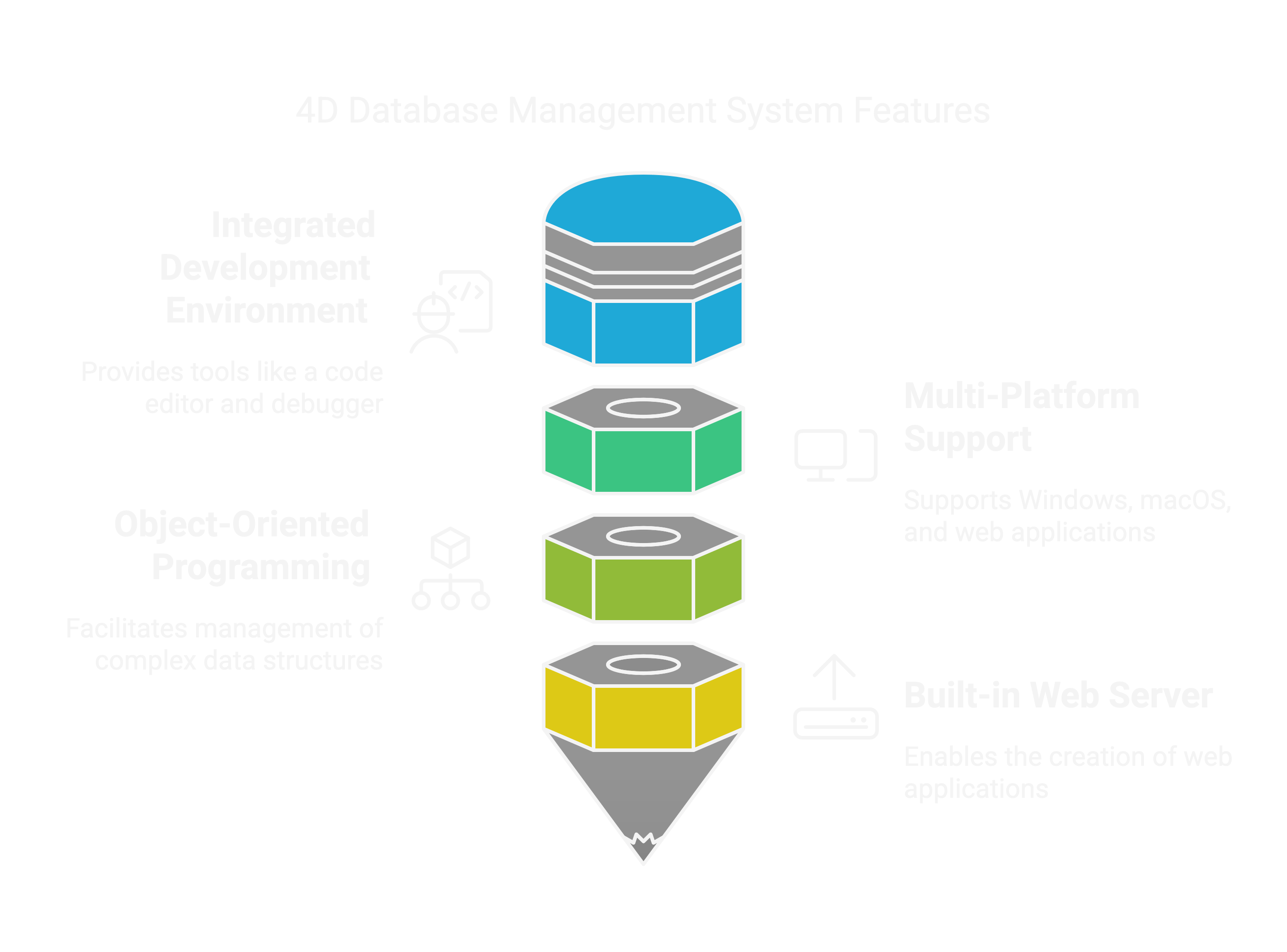
4D is a relational database management system (RDBMS) that combines a database engine with an integrated development environment (IDE). It is designed for building business applications with an emphasis on ease of use and rapid development.
Key Features of 4D:
Relational database capabilities: Supports SQL and NoSQL-like data storage.
Integrated Development Environment (IDE): Provides tools for building business applications.
Cross-platform support: Works on Windows and macOS.
Scalability: Suitable for small to medium-sized enterprises.
Customizable: Allows developers to create tailored database solutions.
What is Alibaba Cloud ApsaraDB for PolarDB?
Alibaba Cloud ApsaraDB for PolarDB is a cloud-native relational database service designed for high performance, scalability, and security. It supports MySQL, PostgreSQL, and Oracle compatibility, making it a versatile choice for large-scale applications.
Key Features of ApsaraDB for PolarDB:
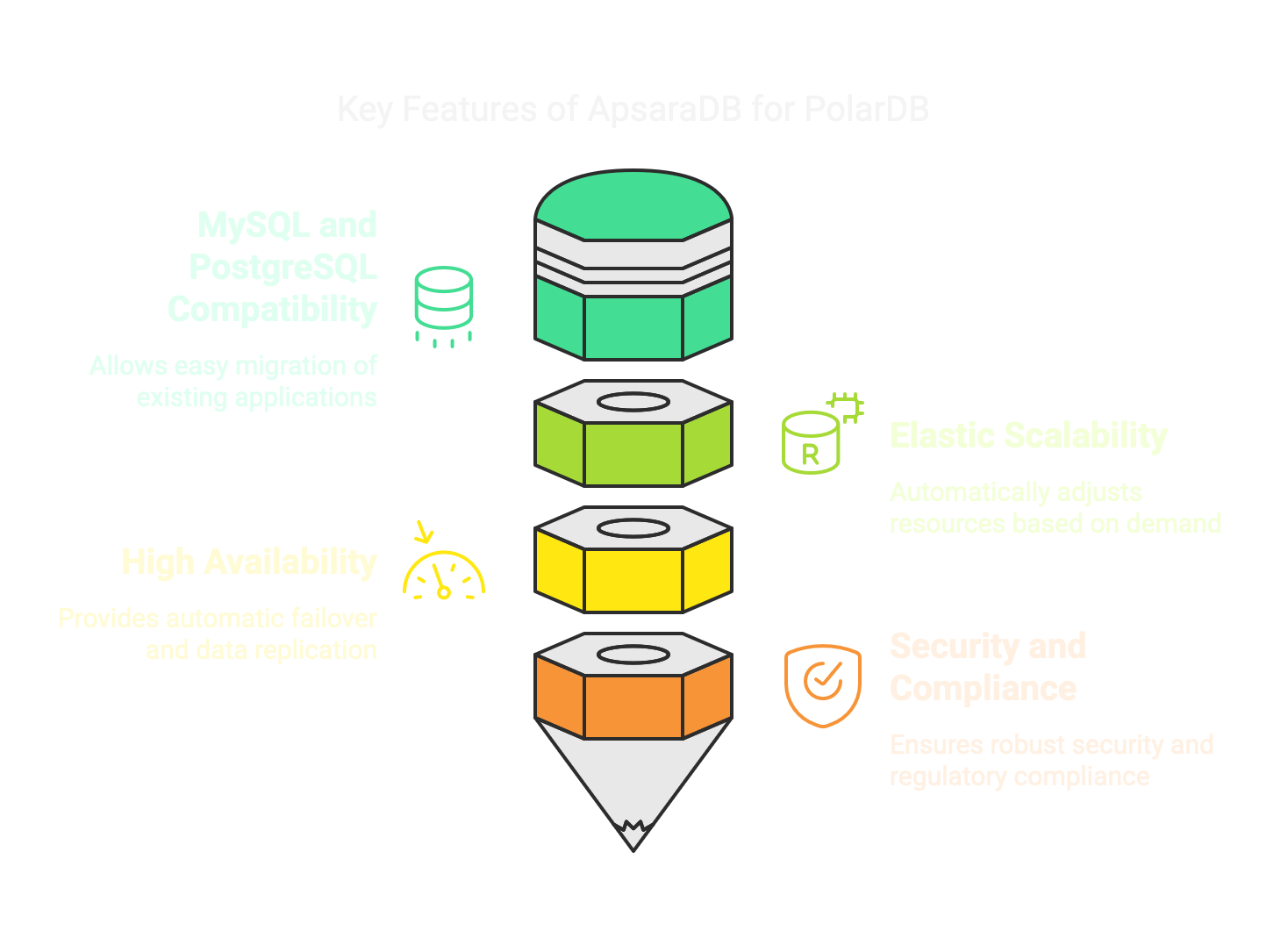
Cloud-native architecture: Offers high availability and fault tolerance.
MySQL, PostgreSQL, and Oracle compatibility: Supports multiple database engines.
Automatic scaling: Dynamically adjusts resources based on workload.
Distributed storage: Provides high-speed access to massive amounts of data.
Enterprise-grade security: Ensures data protection and compliance.
Comparison Table
| Feature | 4D | ApsaraDB for PolarDB |
| Type | Relational Database | Cloud-Native Relational Database |
| Primary Use Case | Business application development | High-performance cloud applications |
| Performance | Optimized for business logic | High-speed due to distributed storage |
| Scalability | Suitable for SMEs | Highly scalable with automatic scaling |
| Data Model | Relational | Relational with multi-engine support |
| Querying Mechanism | SQL | SQL (MySQL, PostgreSQL, Oracle) |
| Fault Tolerance | Manual backup required | Built-in redundancy and failover |
| Integration | Windows/macOS applications | Cloud-native applications |
Example Use Cases
Example: 4D for Business Application Development
C_OBJECT($record)
$record:=ds.Customer.new()
$record.Name:="John Doe"
$record.Age:=30
$record.save()
This example shows how an object is created and stored in 4D.
Example: ApsaraDB for PolarDB for Cloud-Based Applications
CREATE TABLE Customers (
    ID INT PRIMARY KEY AUTO_INCREMENT,
    Name VARCHAR(255),
    Age INT
);
INSERT INTO Customers (Name, Age) VALUES ('John Doe', 30);
SELECT * FROM Customers WHERE Name = 'John Doe';
This example demonstrates ApsaraDB for PolarDB SQL-based querying.
When to Use 4D vs. ApsaraDB for PolarDB
| Scenario | Best Choice |
| Building business applications | 4D |
| On-premise database management | 4D |
| High-performance cloud computing | ApsaraDB for PolarDB |
| Scalable enterprise applications | ApsaraDB for PolarDB |
| Multi-engine support (MySQL, PostgreSQL, Oracle) | ApsaraDB for PolarDB |
Conclusion
4D and ApsaraDB for PolarDB serve different database needs—4D is best suited for business application development and on-premise database solutions, while ApsaraDB for PolarDB excels in high-performance cloud applications and scalable enterprise solutions. Choosing the right database depends on business requirements, scalability needs, and deployment preferences.